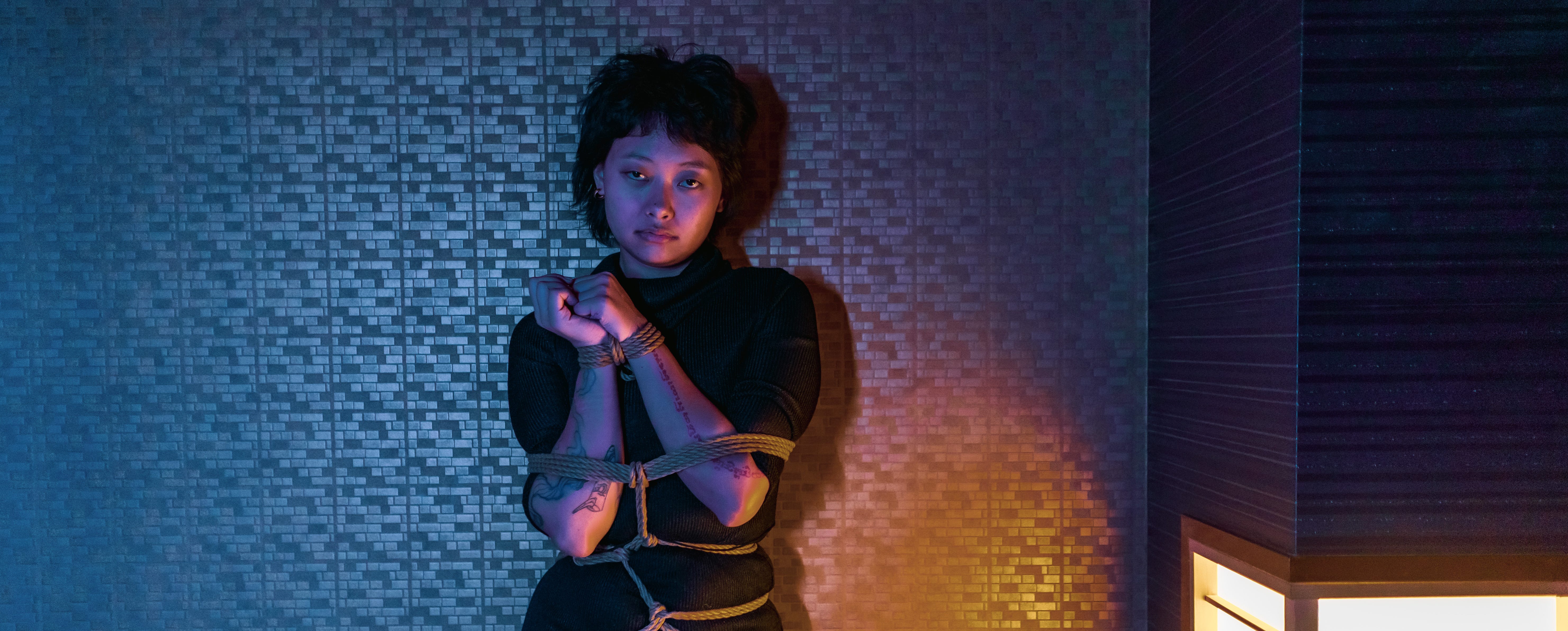
Session with Patricia
And some thoughts about strangers

It is often said that Shibari is a powerful tool for connection, that ropes are a language on its own, and that tying someone can bring them much closer to us in an instant. I tie with strangers almost more often than I tie with people I know. Sometimes I tie with a person I had just met with no context, and sometimes I meet someone online and only after a few years I do get to have a session with them. Sometimes we have a consulting conversation for hours, and sometimes we merely exchange a few messages. In every of those occasions is practically the same: online connection reveals itself mostly empty, and the power of Shibari gets reaffirmed. The ropes dissolve certain qualities that words and ordinary experiences can not.
But what are those qualities? What is that that gets dissolved? I think about the aspects of ourselves that we communicate with our story, with our image, with our body language. All of them are tools from the surface, languages we can hear or see, something we can somehow explain. I think Shibari is different, a language that runs deeper and talks about our fears, our self-imposed limitations, and our expectations. The first contact with the ropes is a sudden collapse of our separation from the world. It is a catapult that forces us to let go, a convincing invitation to surrender.
I connected with Patricia a couple of years ago while she was traveling in Tokyo. We wanted to have a session together, but circumstances did not allow it. She went back to the Philippines, and life went on. She became one of those “met online” cases.
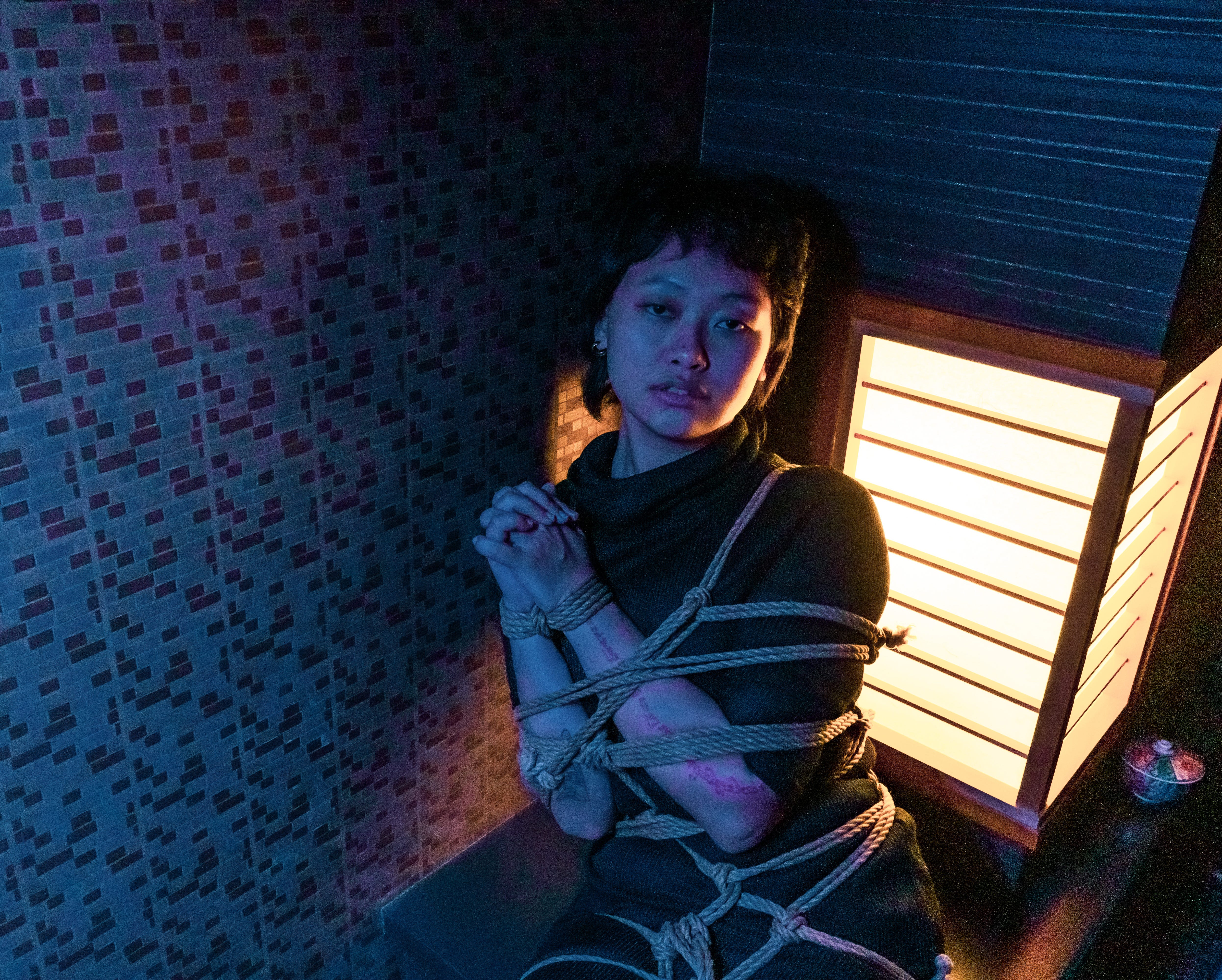
In hindsight, we were "Insta friends" - liking each other's pictures, watching our stories, and being part of each other's virtual lives. We were a promise of an experience, a memory that never happened - "Insta strangers", a step forward in the almost-relationship ladder. And then the memory did happen. Patricia and I ended up meeting and became strangers in real life. This time the circumstances were also difficult (are they ever easy?) because my wife and I were back in Tokyo after one year abroad, only briefly before going to Okinawa. We were in town for less than a week, leaving Patricia and me just a couple of possible days to meet. On top of it, I had closed my studio during my year traveling, and I did not have a proper place to have a session. I had to return to the foundation of my rope training, tying in a Love Hotel, something I had not done in a long time.
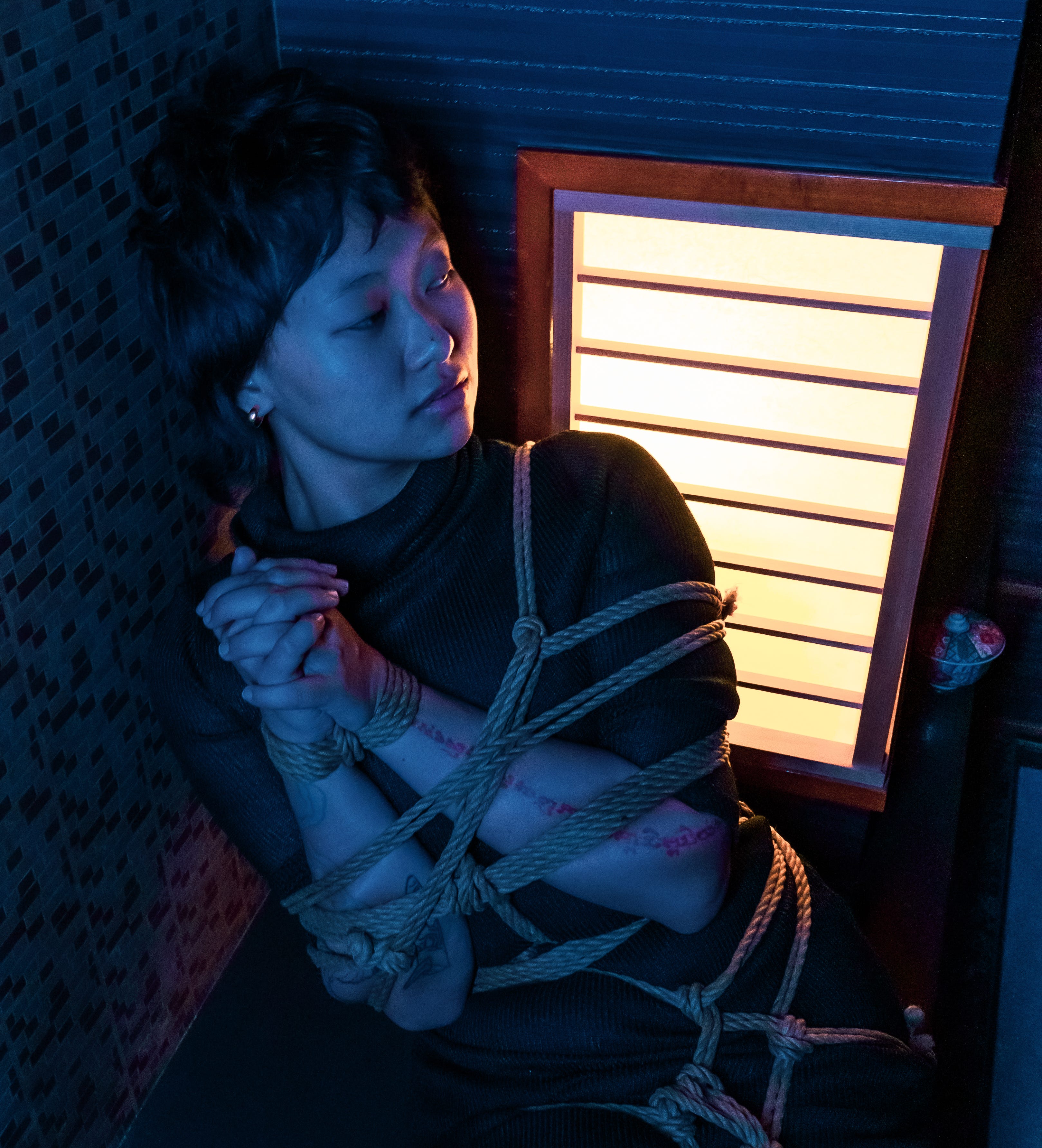
We met for coffee in Shibuya to discuss our intentions and expectations for the session. This conversation also gives me an implicit theme that guides me while I tie. With Patricia, we talked about sex and taboos, her consulting practice in the Philippines, and her ideas about being free. We talked about how it was interesting that we never met, but somehow we did, and how it would feel to go together to a Love Hotel without knowing each other. I told her that Shibari may be a practice for connection and letting go, a ceremony that allows us to explore our relationship with ourselves. I had the impression that she would be very receptive, that the ropes would take her somewhere far away, or rather, bring her very close.


If you have been to a Japanese Love Hotel, you know it is not a place you can reserve. There is always some level of randomness, almost like a Gacha game. I want to write more about them in another post, but for now, let's say not every room is suitable for a Shibari session. I guess I am very picky. There are only a few hotels that I like in Shibuya, and only a few rooms in each of them. I don't like tying on the bed. Not only does it bring a sexual connotation I don't need, but also it is too soft to create comfortable contact with another person. In a sense, it is too tiring to not fall into it. The floor is ok, but it needs to be spacious, ideally enough to put some blanket on it. Of course, tatami is the best, but even then, only if it has a futon you can remove and not a sexualized bed you cannot avoid.
We tried the first one, but it was all booked. It was late afternoon, and Shibuya was busy doing siesta; our options were limited. I like to have a studio because the overall experience is more convenient, but I must say this quest is also exciting and fun. We went to the second hotel and had more luck, but the rooms were not ideal. It is a difficult decision: to compromise and get an ok room, or take a risk and get nothing after a walk in the most awkward neighborhood in Japan. We went for the ok room, maybe for a session on the floor. We pressed a red button that said "rest", paid around 5000 yen, and got the room for a couple of hours. When we went in, there was a tatami, there was a removable futon, it was perfect. It really is a Gacha game.
First, prepare the room by folding the futon and blankets and placing them in the hallway. Take out the trash bins, tissue boxes, TV remote, and drink menu. Dim the lights and turn off the background music. Finally, set up my lights and speaker and play my music. It has been more than three years since I have performed this ritual, but some things are difficult to forget. In almost no time we were ready, and the newly occupied hotel didn’t feel like a cheap place to get laid. Due to the lack of lighting and the power of music, the room had transformed into a luxurious Japanese-style room.
Patricia didn't want to wear clothes during the session, which is not that common, but she said it would allow her to let go more easily. I also suggested that she be blindfolded. In my experience this is the most important aspect to go inside (or outside) of yourself, to be there as much as possible. I waited outside while she was getting ready, and when she called me, I went in. There I was with a naked and blindfolded stranger who had given me her absolute trust. I feel a deep sense of responsibility, a humbling present I feel honored to receive every time. How can I give back such a thing? I am manipulating a delicate piece of origami that has already been folded; all I do is find the original creases and extract the figure that lies within the paper.
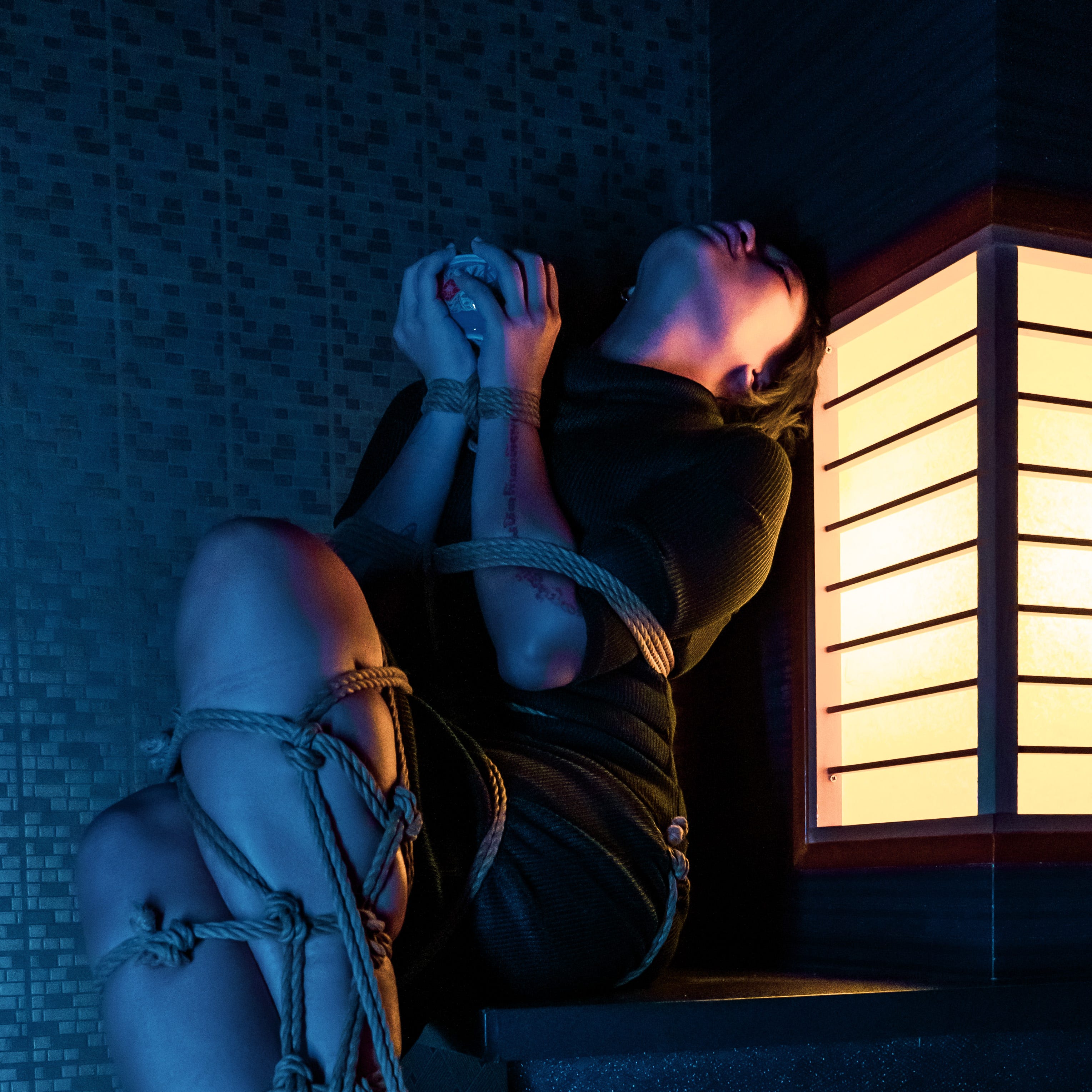
If you see a picture of someone tied in the Japanese style, you may feel surprised about the number of ropes and complicated knots. In fact I think there is only one knot. The first rope is all. The first rope breaks the barrier that separates us, that separates you from the world. The rest are just a vehicle for contact, almost an excuse to continue the trip. It's a click, an instant that determines what it means to be a stranger. Are we open to this two-way interaction, where connecting with others requires us to connect with ourselves?
Sometimes it is easier to let a stranger touch us because there is less noise. If we project onto others, the less we know, the more we project. A stranger is then mostly projection, you could say, a stranger is mostly us. Of course, when I tie a stranger, I need to be more mindful of the details, more attentive to their message, and listen to what they have to communicate with a lower signal. In return, I can give something precious.
If you bring courage to a Shibari session and you open yourself to a person you don't know, you open as well to the world, to yourself. If you trust a stranger with vulnerability and you receive care and respect, you dissolve your fears, you become invincible.
P.S.: If you are curious, you can see what she wrote about our session in this Instagram post!
Thank you very much for your attention,
Pablo Shibari